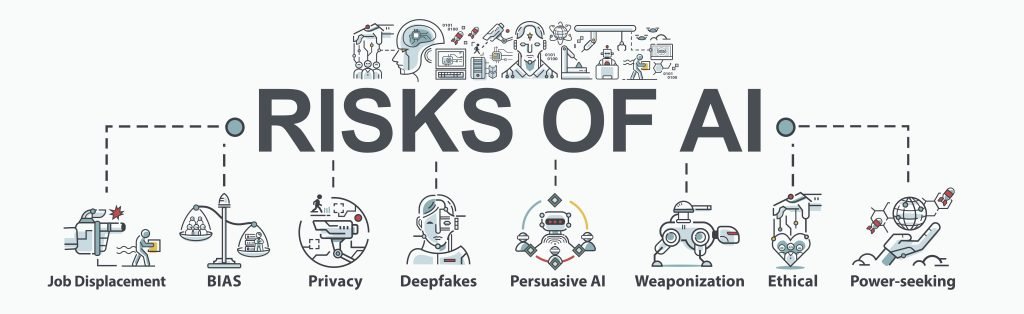
It's no secret that artificial intelligence is seeping into every corner of our lives, and politics is certainly no exception. From crafting campaign messages to predicting voter behavior, AI is rapidly reshaping our democratic landscape. But this technological leap comes with profound challenges, raising critical questions about the Ethical Implications and Misinformation Risks of Political AI that threaten to undermine the very foundations of trust and truth.
We’re talking about a world where the line between genuine and fabricated information blurs, where deepfakes can impersonate leaders, and algorithms can tailor realities to manipulate public opinion. Understanding these risks isn't just for policymakers or tech experts; it's essential for every citizen navigating the modern information age.
At a Glance: Navigating the AI-Driven Political Minefield
- AI's Dual Role: AI is used extensively in political campaigns (messaging, voter targeting) and government (decision-making, public services), offering both efficiencies and new risks.
- Misinformation on Steroids: Generative AI creates hyper-realistic fake content (deepfakes) and helps spread it rapidly through microtargeting, biased algorithms, and social bots.
- Erosion of Trust: These tactics deepen political divides, undermine public discourse, and challenge the credibility of legitimate information, impacting individual autonomy and democratic participation.
- Surveillance Risks: AI-driven surveillance systems (facial recognition, tracking) empower authoritarian regimes to monitor citizens and suppress dissent.
- The Fight Back: AI is also being developed to detect disinformation, but it faces significant ethical challenges, including defining "truth," avoiding censorship, and ensuring transparency.
- Regulatory Efforts: Bodies like the EU are attempting to regulate AI in politics through measures like the Digital Services Act (DSA), focusing on transparency and accountability, though challenges remain.
- Path Forward: Addressing these issues requires a multi-pronged approach: adapting the digital ecosystem, changing platform business models, supporting independent media, using AI for manipulation detection (not content quality assessment), and boosting media literacy.
When AI Enters the Political Arena: A New Battleground
Artificial intelligence isn't just a background player in modern politics; it's increasingly a central actor. Its applications span the entire political spectrum, from influencing individual voters to shaping national governance.
The Campaign Trail: AI as Chief Strategist
Think of a political campaign today. What comes to mind? Likely rallies, speeches, and ads. Now, imagine all of that amplified and personalized by AI. Political campaigns and advertising agencies are leveraging AI to:
- Generate Content: AI crafts campaign emails, fundraising appeals, social media posts, and even images and videos. This means a constant flow of tailored content designed to resonate with specific demographics.
- Voter Targeting & Messaging: Algorithms analyze vast amounts of voter data to identify key demographics, predict their concerns, and deliver customized messages. For instance, the 2024 presidential elections have seen extensive AI use, with campaigns employing algorithms for sophisticated voter targeting. When you hear about the Trump AI generator and similar tools, you're seeing this in action – AI producing content in a specific voice or style.
- Real-time Insights: AI provides instant feedback on voter opinions, tracks sentiment across social media, and predicts election outcomes with remarkable accuracy, allowing campaigns to pivot strategies almost instantly.
The sheer scale and personalization made possible by AI mean that political messaging can be far more pervasive and persuasive than ever before.
In the Halls of Power: AI in Governance
It’s not just campaigns. Governments around the world are adopting AI to streamline bureaucratic processes and improve public services. In Washington, D.C., for example, 20 different agencies are using AI for critical decisions—everything from allocating public benefits to determining housing eligibility.
While this promises greater efficiency, it also raises serious questions:
- Transparency and Accountability: How do we hold algorithms accountable when their decision-making processes are often opaque? Who is responsible when an AI makes a biased or harmful decision?
- Bias Perpetuation: AI systems learn from existing data, which often contains historical biases. If unchecked, these systems can inadvertently perpetuate and even amplify unequal treatment in public services.
The stakes are incredibly high. AI's integration into governance means its ethical implications are no longer hypothetical; they directly impact citizens' lives and access to fundamental rights.
The Misinformation Machine: How AI Supercharges Deception
Disinformation—false information shared with the intent to deceive—is as old as politics itself. But AI has transformed it from a manual craft into an industrial-scale operation. Unlike mere misinformation (which lacks deceptive intent), AI-boosted disinformation is a deliberate assault on truth, designed to manipulate perceptions and deepen divisions.
The speed and scale with which AI can create and disseminate deceptive content are unprecedented, posing significant threats to democratic processes.
Crafting the Illusions: Deepfakes and Synthetic Realities
At the heart of AI-driven disinformation is generative AI's ability to create highly realistic fake content. These are often called deepfakes.
- What are Deepfakes? They are products of Generative Adversarial Networks (GANs), sophisticated AI models that can generate new, realistic images, audio, video, or text from existing datasets. Imagine feeding an AI hundreds of pictures or audio recordings of a person; it can then create entirely new, convincing content of that person saying or doing things they never did.
- Accessibility and Impact: Deepfakes are surprisingly accessible, often requiring only a relatively small amount of source material. This makes it possible for anyone with access to the technology to create compelling fakes. This capability not only fuels the spread of false information but also undermines the credibility of legitimate information, making it possible to dismiss real content as fake, and vice-versa.
- Real-World Examples: We’ve seen AI-generated news anchors used for propaganda, deepfakes of political leaders spread to sow distrust, and large-scale false constituent sentiments generated by bots. A 2020 experiment showed that AI-generated advocacy letters sent to 7,200 state legislators had response rates nearly indistinguishable from human-written ones, with only a 2% margin.
This ability to produce vast amounts of convincing, fabricated content floods the media landscape, making it incredibly difficult for individuals to discern reality from fiction.
Amplifying the Deception: Dissemination at Scale
Beyond creation, AI dramatically boosts the dissemination of disinformation through several sophisticated mechanisms:
- Microtargeting: The internet's advertising-based economic model thrives on data. AI tracking methods (like browser cookies and fingerprinting) gather immense amounts of personal data, allowing malicious actors to target specific users with particular disinformation. This precision ensures that deceptive content reaches the most receptive audiences, making it incredibly effective.
- Algorithms and the "Economics of Attention": Online platforms prioritize user engagement and viewing time to maximize ad revenue. Their algorithms, like Facebook's News Feed or YouTube's recommender system, create personalized "versions of reality" for each user. This can lead to the formation of "filter bubbles" and "echo chambers," where individuals are primarily exposed to content that reinforces their existing views, limiting their exposure to diverse perspectives and making them more susceptible to manipulation. YouTube's algorithm, for instance, has been criticized for creating "vicious feedback loops" that promote divisive content.
- Social Bots: These are fully or semi-automated social media accounts designed to imitate human behavior. Bots can infiltrate online communities, foment political strife, skew online discourse, and efficiently disseminate disinformation by blending in seamlessly. They can amplify messages, create the illusion of widespread support or opposition, and manipulate trends, all at a scale impossible for human operators.
The Erosion of Democracy: Ethical Implications of AI Misinformation
The cumulative effect of AI's ability to create and spread disinformation is not just an inconvenience; it represents a fundamental challenge to our ethical principles and the very fabric of democracy.
- Human Dignity: When individuals are relentlessly profiled and targeted with manipulative content, they are treated as means to an end—data points for economic or political gain—rather than ends in themselves, eroding their dignity.
- Autonomy: The constant stream of personalized, manipulated information, reinforced by filter bubbles and echo chambers, impairs an individual's capacity to make free and informed decisions. This limits their right to accurate information and erodes trust in legitimate news sources.
- Democracy: A healthy democracy relies on an informed citizenry capable of engaging in rational discourse. Opinion manipulation by AI-driven disinformation directly impacts citizens' ability to participate meaningfully in democratic processes. The public's trust in institutions, elections, and the media becomes severely compromised.
- Peace and Stability: By reinforcing ideological echo chambers and limiting exposure to diverse viewpoints, AI can nurture radicalization and reduce tolerance for differing opinions. This exacerbates political divides, leading to increased social polarization and endangering societal peace and stability.
The Surveillance State Amplified by AI
Beyond disinformation, AI also significantly exaggerates the surveillance capabilities of states, particularly in authoritarian regimes.
- Russia has employed deepfakes against political opponents, a tactic aimed at fostering widespread distrust in media and legitimate information.
- China utilizes AI-driven surveillance systems on an unprecedented scale. This includes extensive facial recognition technology and vast camera networks to monitor citizens' movements, track their activities, and predict or prevent dissent. These systems infringe on fundamental privacy rights and effectively stifle any form of opposition, creating an environment of pervasive fear and control.
While AI offers potential benefits like higher civic engagement (e.g., chatbots helping draft letters to officials), its misuse demands urgent regulation to protect fundamental freedoms.
Fighting Fire with Fire: AI Against Disinformation
Recognizing the existential threat, AI techniques are also being developed to tackle disinformation. However, this is far from a miraculous solution and brings its own set of challenges.
The Tools of Detection
Efforts to detect AI-generated content and disinformation include:
- For False Articles: Machine learning models, analysis of misleading stylistic elements, and metadata analysis are used. Human fact-checkers remain superior at factual inaccuracy detection. These systems are prone to false positives and negatives and can carry biases (e.g., Facebook's AI in 2018 lacked sufficient data for languages outside English and Portuguese).
- For Deepfakes: Techniques involve distinguishing fake from real (e.g., detecting abnormal eyelid movement, though deepfakes constantly adapt), content authentication (digital labeling), and even "authenticated alibi services" (which raise significant privacy concerns). The Deepfake Detection Challenge, an industry initiative, aims to promote technical solutions.
- For Social Bots: Machine learning, social network analysis, account data scrutiny, and natural language processing are employed. Platforms like Facebook have reported success, flagging 99.6% of fake accounts in Q4 2020 before user reports.
Regulating the Flow: Content Moderation by Tech Providers
Tech platforms employ various methods to regulate content, including:
- Filtering, Removal, Blocking: Content deemed harmful or illegal can be filtered, removed, or blocked, though circumvention methods like VPNs exist.
- (De)prioritization: Content can be algorithmically prioritized or deprioritized, influencing its reach.
- Account Disablement/Suspension: Users or accounts that violate platform policies can be suspended or disabled (e.g., the suspension of Donald Trump's accounts).
- Decentralized Web (Dweb) Technologies: Efforts are also underway to develop decentralized web technologies to prevent central data control and its potential for misuse.
The Ethical Minefield of Tackling Disinformation with AI
Even with the best intentions, using AI to combat disinformation introduces a new layer of ethical complexities:
- Defining Disinformation: Who decides what constitutes "false, inaccurate, or misleading information"? Distinguishing between genuine disinformation, satire, propaganda, or a mere hoax is incredibly difficult, and a universally agreed-upon definition is elusive. Empowering any entity—be it states, regulators, or platforms—to define content quality or reliability raises fundamental freedom of expression concerns.
- Freedom of Expression: AI systems, by design, detect patterns of false or misleading information without discerning intent. This can lead to over-censorship, as assessing malicious intent is a deeply human and nuanced task that machines struggle with. The core problem is the malicious use of technology to manipulate individuals, not merely the quality of the content itself.
- Transparency and Explainability: Content regulation by platforms is often opaque, leaving users in the dark about why certain content is removed or promoted. The inherent complexity of AI systems also makes their decision-making processes challenging to explain, hindering accountability.
- Bias and Discrimination: AI systems can exhibit biases (e.g., language limitations), leading to unequal treatment in content moderation and affecting equality. Content in marginalized languages or from underrepresented communities might be disproportionately flagged or ignored.
- Media Pluralism: Content ranking algorithms that prioritize "authoritative sources" can inadvertently suppress new voices, alternative viewpoints, or investigative journalism that challenges established narratives, thereby hindering media pluralism.
- Human Moderators: Despite AI's advancements, human moderators remain crucial. This work is difficult and emotionally taxing, leading to significant mental health challenges (e.g., Facebook paid $52 million to 11,250 moderators for PTSD).
- Privacy Concerns: Tackling disinformation in private messaging applications (like WhatsApp) presents significant privacy concerns, as it often requires accessing or analyzing private communications.
The European Union's Quest for Regulation
The EU has been at the forefront of attempting to regulate the digital space, shifting from self-regulatory frameworks to more robust co-regulatory approaches, largely through the Digital Services Act (DSA).
Early Efforts: The Code of Practice on Disinformation
In 2018, the EU introduced the Code of Practice on Disinformation, a self-regulatory framework endorsed by major online platforms (Google, Facebook, Twitter, Mozilla, Microsoft, TikTok). It covered areas like scrutinizing political ads, ensuring service integrity, and empowering consumers. However, an assessment in 2020 highlighted several shortcomings:
- Inconsistent Reporting: Platforms provided disparate reports on their efforts.
- Limited Coverage: Key services like WhatsApp were not covered.
- Lack of Independent Oversight: There was no effective independent body to monitor compliance.
- Data Access Issues: Researchers struggled to access crucial data.
- No Consequences: There were no clear consequences for breaches of the Code.
- Fundamental Rights Protection: The Code lacked robust mechanisms to protect fundamental rights.
The Digital Services Act (DSA): A New Paradigm
Proposed in 2020 and now in effect, the DSA aims to enhance platform accountability significantly, particularly for Very Large Online Platforms (VLOPs – those reaching over 10% of the EU population, or roughly 45 million users).
Key provisions include:
- Transparency Obligations: All intermediary services must disclose their content moderation policies, including how algorithmic decision-making is used. VLOPs have expanded obligations, requiring public reports on automated moderation.
- Redress Mechanisms: Hosting services must provide clear reasons for content removal (even automated removals) and offer accessible redress possibilities, including internal complaint systems, out-of-court dispute settlement, and judicial redress.
- Advertising Transparency (VLOPs): VLOPs must clearly identify ads, their advertisers, and the parameters used for targeting. They must also maintain public repositories of ad information.
- Recommender Systems (VLOPs): VLOPs are required to outline the main parameters of their recommender systems in their terms and conditions and offer users options to modify them, including at least one option not based on profiling (e.g., chronological feed).
- Risk Assessments (VLOPs): VLOPs must identify and mitigate systemic risks stemming from their algorithmic systems, fake accounts, bots, and intentional manipulation.
- Crisis Protocols: The European Commission can initiate special protocols during public security or health emergencies, though this raises concerns about potential infringements on freedom of expression.
Critiques and Positive Approaches
While the DSA marks a significant step, critics argue it doesn't sufficiently differentiate disinformation from illegal content, potentially allowing private companies to define "harmful content" for moderation, which could infringe on freedom of expression. Given their reach, VLOPs are increasingly seen as providing essential, quasi-public services. Crisis protocols, while intended for emergencies, risk silencing legitimate voices.
The EU Parliament and Council, however, have voiced positive approaches:
- EU Parliament: Emphasizes media freedom, pluralism, and supporting investigative journalism. It calls for platforms to avoid monopolies, collaborate with fact-checkers, increase transparency in advertising, ensure search algorithms aren't solely ad-based, and boost media literacy. It explicitly warns that automated tools in content moderation may endanger freedom of expression.
- EU Council: Stresses user autonomy, advocating for personalized content based on user-selected criteria. It calls for addressing manipulative dissemination techniques and reiterates that no entity (states, regulators, or platforms) should define content quality or reliability.
Reclaiming the Narrative: A Path Forward for Democracy
The challenge of AI-driven disinformation isn't just a technical one; it's a societal one that demands a holistic response. Our focus must shift from merely moderating content quality to countering the malicious use of technology to manipulate individuals, thereby protecting fundamental rights like freedom of expression and information.
Here's how we can begin to reclaim the narrative and safeguard our democracies:
1. Re-engineer the Digital Ecosystem
We must push for a fundamental adaptation of AI systems to prioritize fundamental rights and ethical values over engagement metrics. This means designing AI with human autonomy, dignity, and democratic participation as core principles, not afterthoughts.
2. Reform the Web's Business Model
The current web business model, heavily reliant on advertiser remuneration and user engagement optimization, is a primary driver of disinformation spread. We need to:
- Diversify Revenue Models: Explore and support alternative revenue models for online platforms that don't depend solely on maximizing user attention at any cost.
- Mandate Non-Profiling Options: Require platforms to offer options for recommender systems that are not based on user profiling, allowing individuals to opt for a less manipulated information diet. The DSA's move in this direction is a positive start.
3. Support Independent Media and Journalism
A robust, independent media landscape is democracy's immune system. We must:
- Enhance Access: Ensure citizens have access to accurate, diverse, and reliable information from a variety of sources.
- Promote Pluralism: Support investigative journalism and media pluralism to counteract the homogenizing effects of algorithmic feeds and provide critical counter-narratives.
4. Harness AI for Manipulation Detection, Not Content Curation
Instead of relying on AI to assess the truthfulness of content—a task fraught with ethical pitfalls—we should leverage AI's strengths to detect the mechanisms of manipulation:
- Identify AI-generated Content: Develop more sophisticated AI to accurately detect synthetic media (deepfakes, AI-generated text) at scale.
- Spot Social Bots and Malicious Networks: Use AI to identify and flag social media bots and coordinated inauthentic behavior, making it harder for manipulative campaigns to operate.
- Detect Malicious Microtargeting: Employ AI to uncover opaque and unethical microtargeting practices designed to exploit vulnerabilities.
This approach focuses on identifying and mitigating the source and method of manipulation, allowing humans to make judgments about content quality.
5. Cultivate Media Literacy and Critical Thinking
Ultimately, the most powerful defense against disinformation lies within an informed and critical citizenry. Promoting media literacy is crucial:
- Educational Initiatives: Implement widespread educational programs to equip citizens with the skills to critically evaluate information, understand how algorithms work, and recognize manipulative tactics.
- Empower Individuals: Foster a culture where individuals actively question sources, seek diverse perspectives, and understand the motivations behind the content they consume.
In an age where AI can fabricate reality with alarming ease, the future of our democracies hinges on our collective ability to understand, adapt to, and ethically govern these powerful technologies. The challenge is immense, but the stakes—our autonomy, our dignity, and the very foundation of our shared reality—demand nothing less than a concerted, ethical, and proactive response.